A localized gutter problem does not always require complete replacement. The useful question is whether the failure is isolated and repairable or part of a broader problem with the material, attachment, slope or drainage layout.
What gutter problems can often be repaired?
Repairs may address leaking joints, loose hangers, separated outlets, damaged downspout connections, failed end caps or a short affected section. The surrounding material and fascia must still be in suitable condition for the repair to hold.
Visible signs that deserve attention
Water can leave clues along the roof edge, walls and ground even when the problem only appears during rain.
- Dripping from a corner, joint or end cap
- A run that appears low or holds standing water
- Gutters pulling away from the fascia
- Water marks behind or below the gutter
- A downspout that has separated
- Overflow at one recurring location
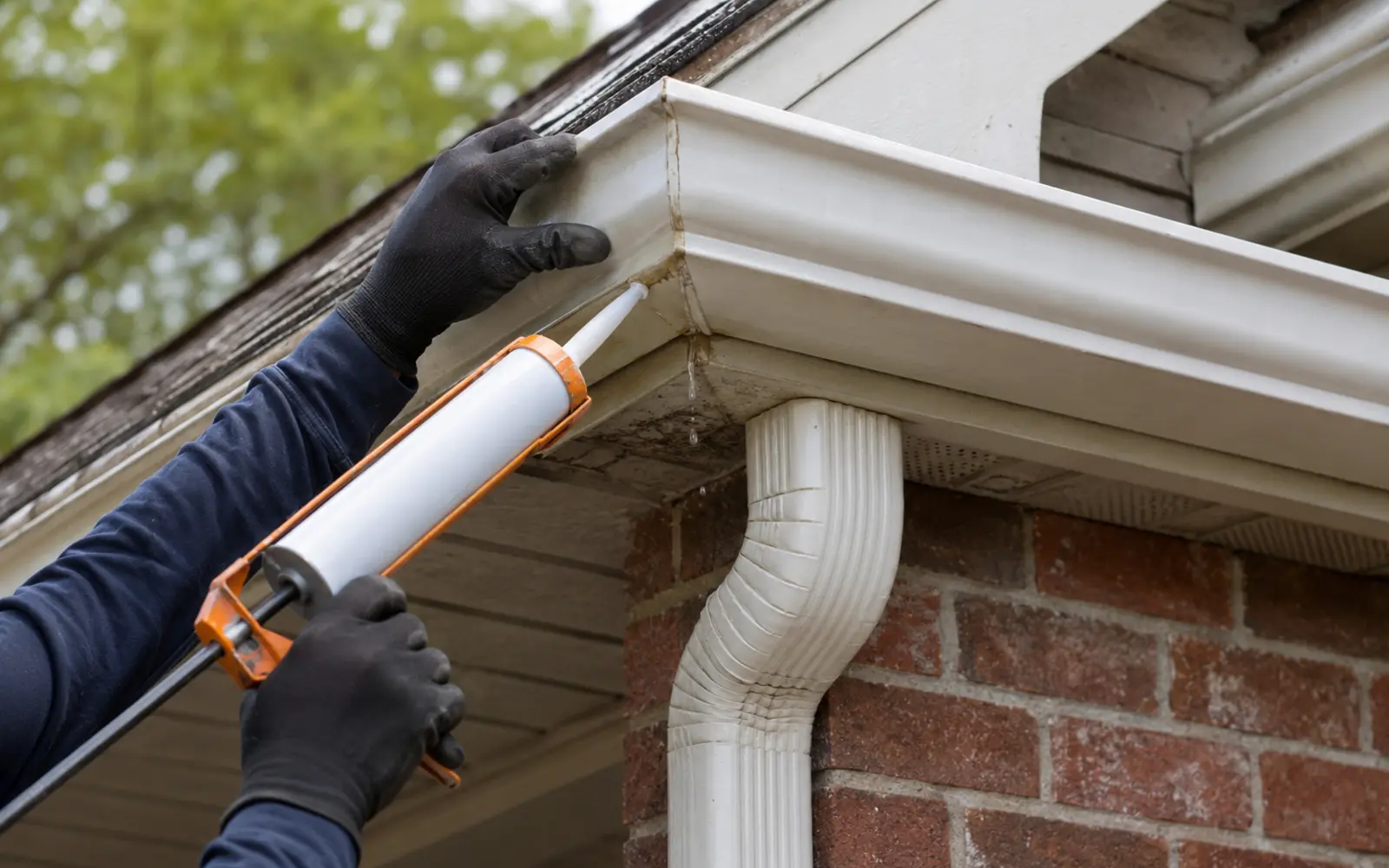
Targeted repairs based on the actual failure
Repair work should address the cause rather than covering the visible symptom temporarily.
Leak Location
Trace the point where water escapes and inspect the surrounding joint or material.
Attachment
Review hangers, fasteners and the condition of the fascia supporting the run.
Alignment
Check whether sagging or poor slope is contributing to standing water or overflow.
Outlet
Inspect the transition from gutter to outlet, elbow and downspout.
Damaged Section
Determine whether a short section can be corrected without replacing the full system.
Water Path
Confirm that repaired water flow has somewhere appropriate to go after the downspout.
A leak can be the symptom, not the full cause
Repeated sealant repairs will not correct an undersized system, widespread distortion, deteriorated fascia or a downspout layout that cannot move the collected water. A useful assessment considers the condition around the leak.
- Age and condition of surrounding gutter material
- Whether the problem is isolated or repeated
- Standing water within the run
- Outlet and downspout restrictions
- Roof valleys concentrating flow
- Fascia movement, staining or deterioration
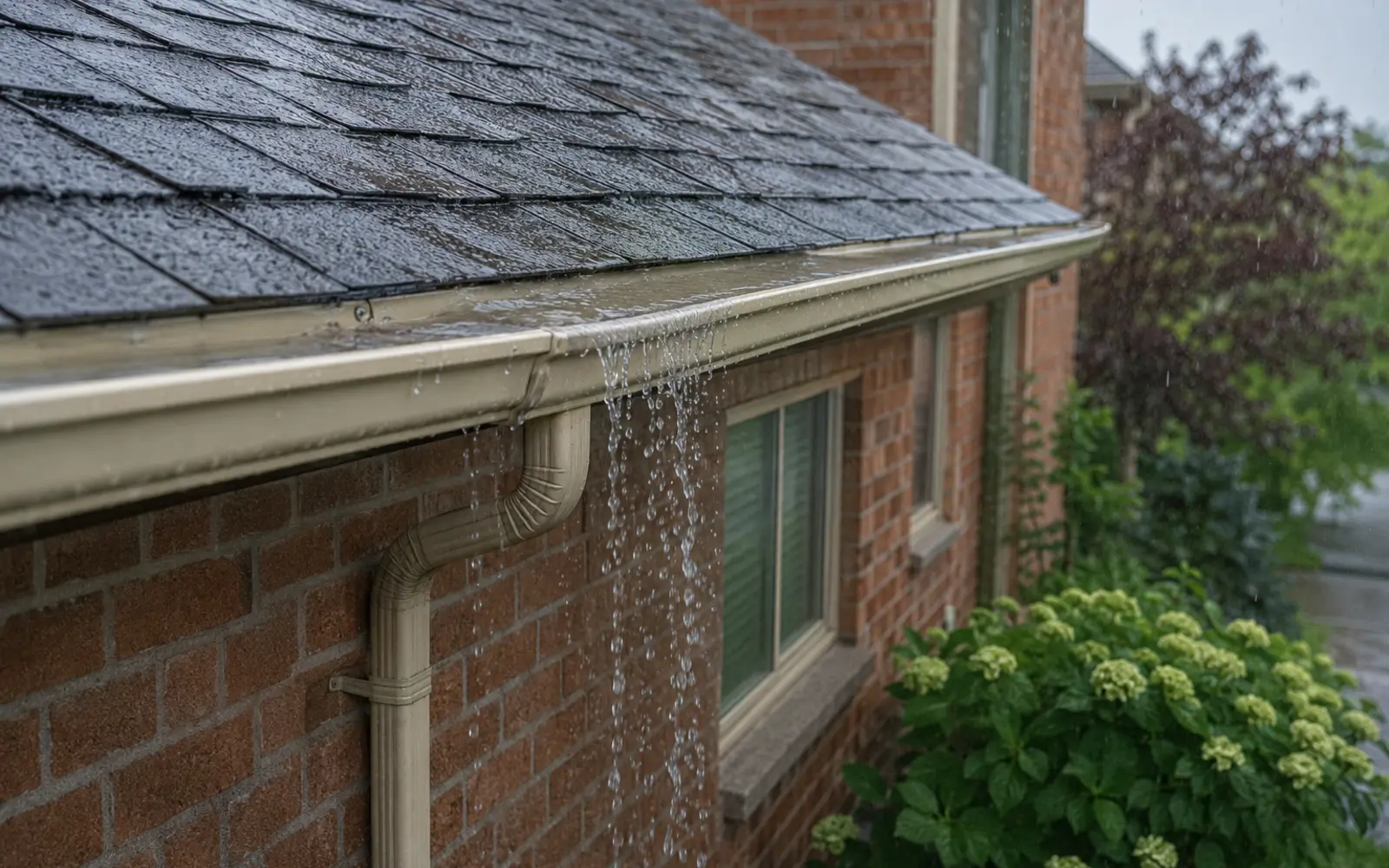
When repair and replacement differ
| Observation | Possible repair path | Possible replacement signal |
|---|---|---|
| One leaking corner | Clean and reseal a sound joint | Several corners fail repeatedly |
| Short sagging section | Re-secure if fascia is sound | Long runs pull away or fascia is damaged |
| Damaged outlet | Repair or replace the outlet connection | Layout needs additional or relocated outlets |
| Small impact area | Replace the affected component | Material is damaged throughout the elevation |
From reported symptom to practical repair
- Describe the issue
- Inspect the area
- Identify the cause
- Complete approved repair
- Review water path
A repair cannot correct every system-wide issue
Repair is valuable when the surrounding system remains serviceable. If damage is widespread or the original layout is consistently inadequate, replacement may provide a more reliable result than repeated localized work.
Useful details for an estimate
- Where the leak, sag or overflow appears
- Whether it occurs during every rainfall
- Number of affected sections
- Building height and access
- Any recent roofing or exterior work
Gutter repair questions
Can a leaking gutter corner be repaired?
Often yes, if the joint and surrounding material are still sound. The area must be assessed because movement, standing water or damaged material can cause the leak to return.
What causes gutters to sag?
Loose or failed attachment, debris weight, standing water, impact damage and deteriorated fascia are possible causes. The cause should be identified before simply lifting the section.
Can one damaged section be replaced?
Sometimes. Compatibility, colour, profile and the condition of adjacent sections determine whether a localized replacement is practical.
Why is water running behind the gutter?
Possible causes include attachment or alignment problems, issues at the roof edge, overflow or damaged components. The path should be traced before recommending a repair.
When is repair not worthwhile?
Replacement may make more sense when leaks, sagging or distortion are widespread, the fascia cannot hold the system, or the layout repeatedly fails to handle runoff.
Have a leaking or sagging gutter?
Describe where the problem appears and whether it occurs during light rain, heavy rain or snowmelt.