Aluminum capping provides a low-maintenance exterior finish over suitable underlying trim. It should be detailed carefully around corners and transitions and should never be used to hide active rot or moisture damage.
What can aluminum capping cover?
Our capping service focuses on fascia and related roofline or exterior trim connected to gutter and soffit projects. Ask about any additional exterior capping when the property is assessed.
Where capping fits into an exterior project
Capping is primarily a finishing and protection layer over material that is already suitable to remain.
- Exposed sound fascia requiring a new finish
- Coordinating trim with new gutters
- Reducing repainting of suitable exterior wood
- Finishing porch or garage roofline details
- Replacing loose or damaged existing capping
- Creating a consistent exterior colour scheme
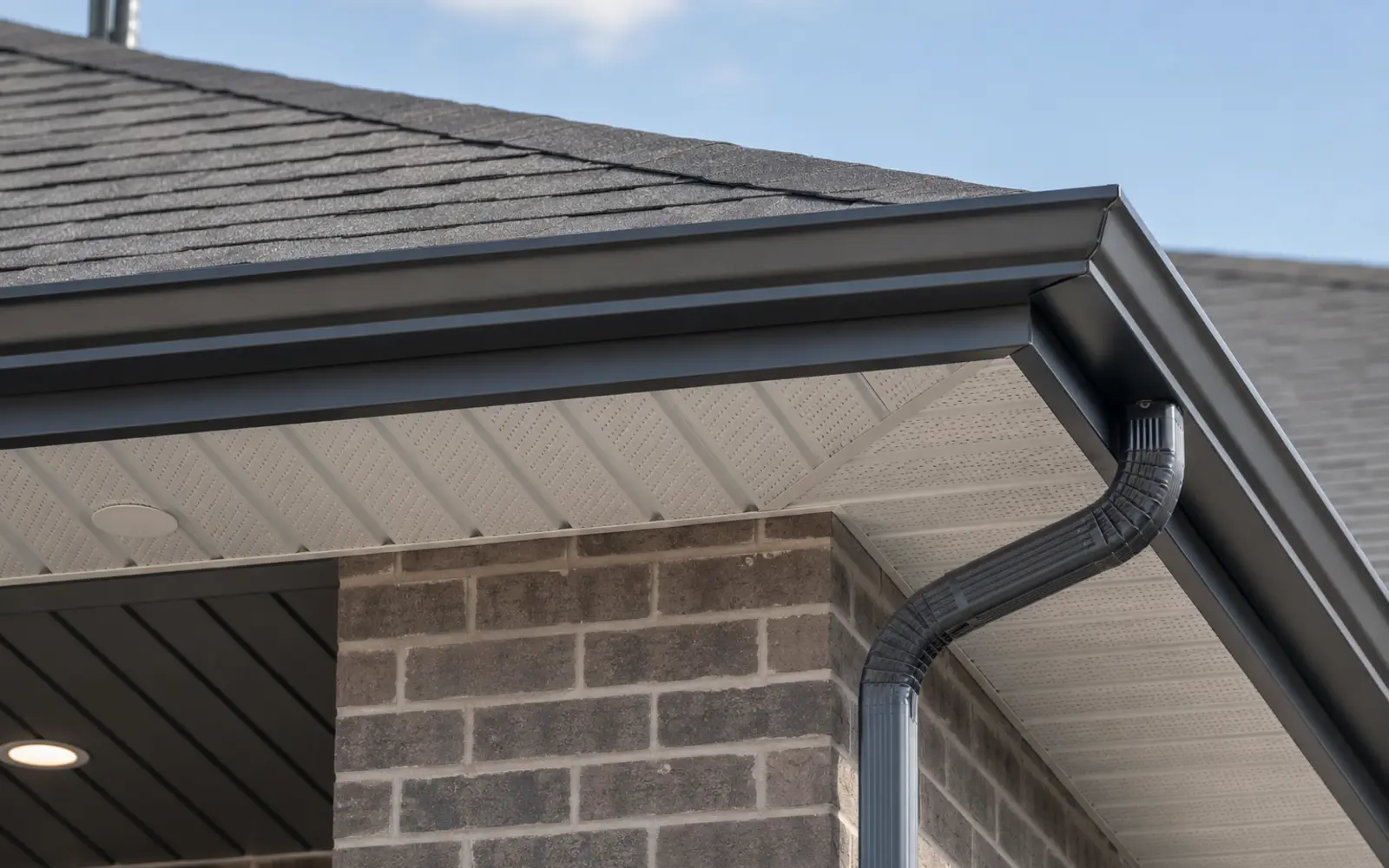
Careful preparation and finished edges
The result depends on both the material beneath and the quality of the bends and transitions.
Surface Review
Confirm that the visible underlying material is suitable to remain.
Scope Definition
Identify fascia and related roofline areas included in the work.
Colour Selection
Coordinate the finish with soffit, gutters, downspouts and adjacent materials.
Custom Bends
Form metal to fit the specific edge rather than forcing a generic cover.
Corners & Joints
Finish transitions in a way that sheds water and maintains a clean appearance.
Gutter Coordination
Plan fastening and sequence where a gutter will be attached at the capped fascia.
The surface beneath the aluminum still matters
Capping changes the exposed finish; it does not restore structural strength to rotten wood or stop an unidentified leak. Suspected damage should be assessed before covering the area.
- Softness, staining or visible rot
- Existing loose metal
- Roof-edge water entry
- Gutter attachment condition
- Corners and complex transitions
- Compatibility with adjacent siding or masonry
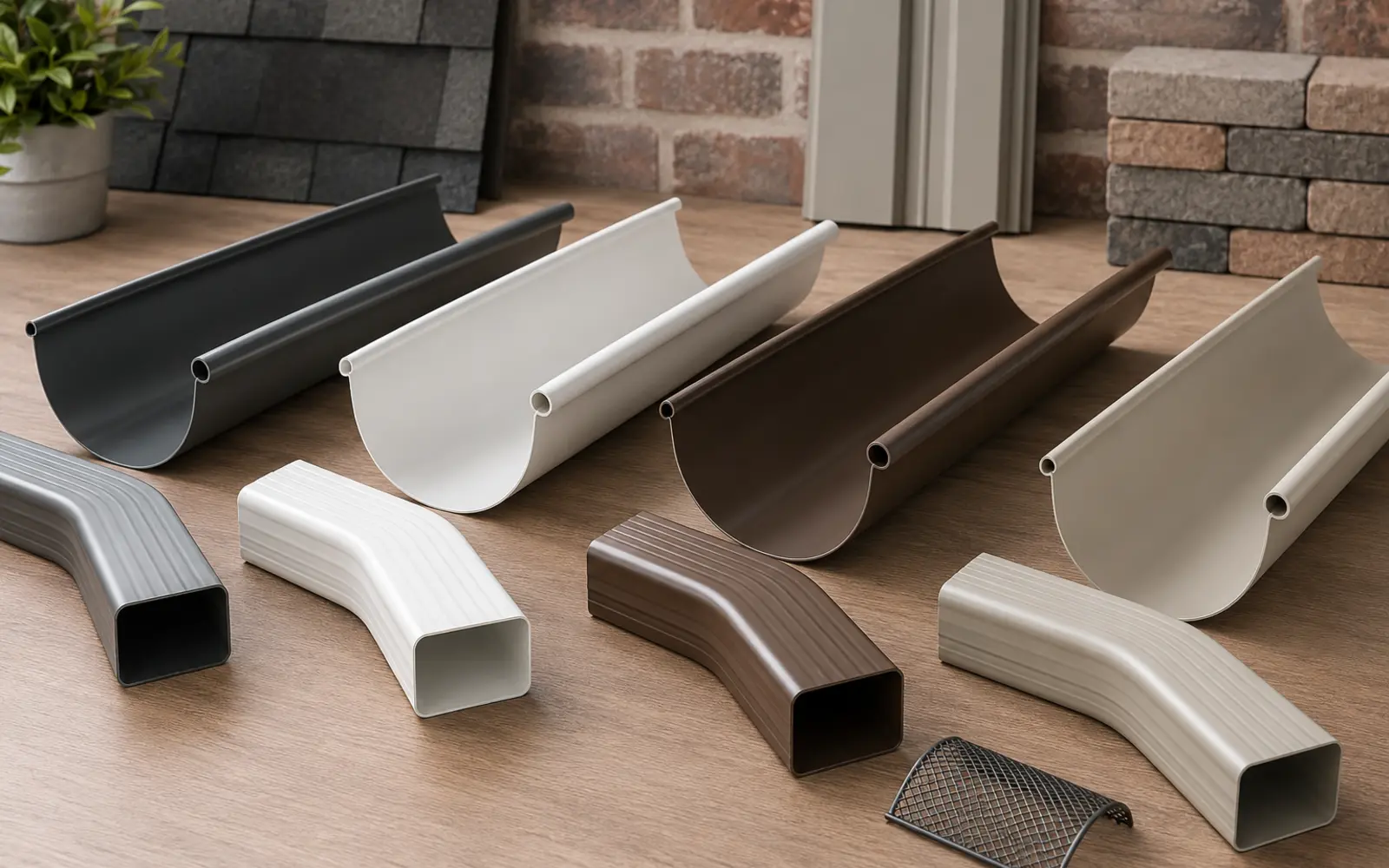
Capping and replacement are different
| Underlying condition | Possible treatment | Why |
|---|---|---|
| Sound and dry | Prepare and cap | Material can remain beneath finish |
| Cosmetically weathered | Assess for capping | Condition matters more than appearance alone |
| Rotten or soft | Replace damaged material | Capping would conceal the problem |
| Active leak nearby | Find and correct water source | New metal is not leak diagnosis |
A clean capping process
- Inspect substrate
- Define areas
- Select colour
- Form and install
- Finish transitions
Roofline capping stays connected to the gutter system
Window, door and garage-door-frame capping is separate from the standard roofline scope. Availability should be confirmed during the estimate.
Useful details for an estimate
- Areas to be capped
- Condition of existing wood or metal
- Related gutter or soffit work
- Preferred colour
- Building height and access
Aluminum capping questions
Does aluminum capping repair rotten wood?
No. Rotten or structurally damaged material should be corrected before a new finish is applied.
Can fascia be capped before new gutters?
Yes, when the supporting condition and installation sequence are suitable for the new gutter attachment.
Is capping available in different colours?
Yes. Colour availability varies by supplier and should be confirmed using current samples.
Can existing loose capping be replaced?
Often, after the underlying surface and cause of movement are assessed.
Do you cap windows and garage doors?
Our standard scope focuses on roofline and related exterior trim. Ask about additional capping when requesting an estimate.
Need fascia or roofline capping?
Describe the exposed trim, its current condition and any gutter or soffit work being considered.