The gutter only collects the water. Downspouts, elbows and extensions determine how that water travels from the roof edge to the ground and whether it is released in a suitable location.
What can downspout work correct?
Downspout work may replace damaged components, reconnect separated sections, reroute water around doors or walkways, add an extension, change an outlet location or improve the visible discharge path. The solution must fit the property rather than shift water toward another problem area.
Signs the downspout path needs attention
Look beyond the vertical pipe and consider where the water enters and exits it.
- Sections that separate during storms
- Crushed or dented downspouts
- Water emptying beside the foundation
- Extensions that cross a walkway
- An outlet that repeatedly blocks
- Water being directed toward neighbouring property
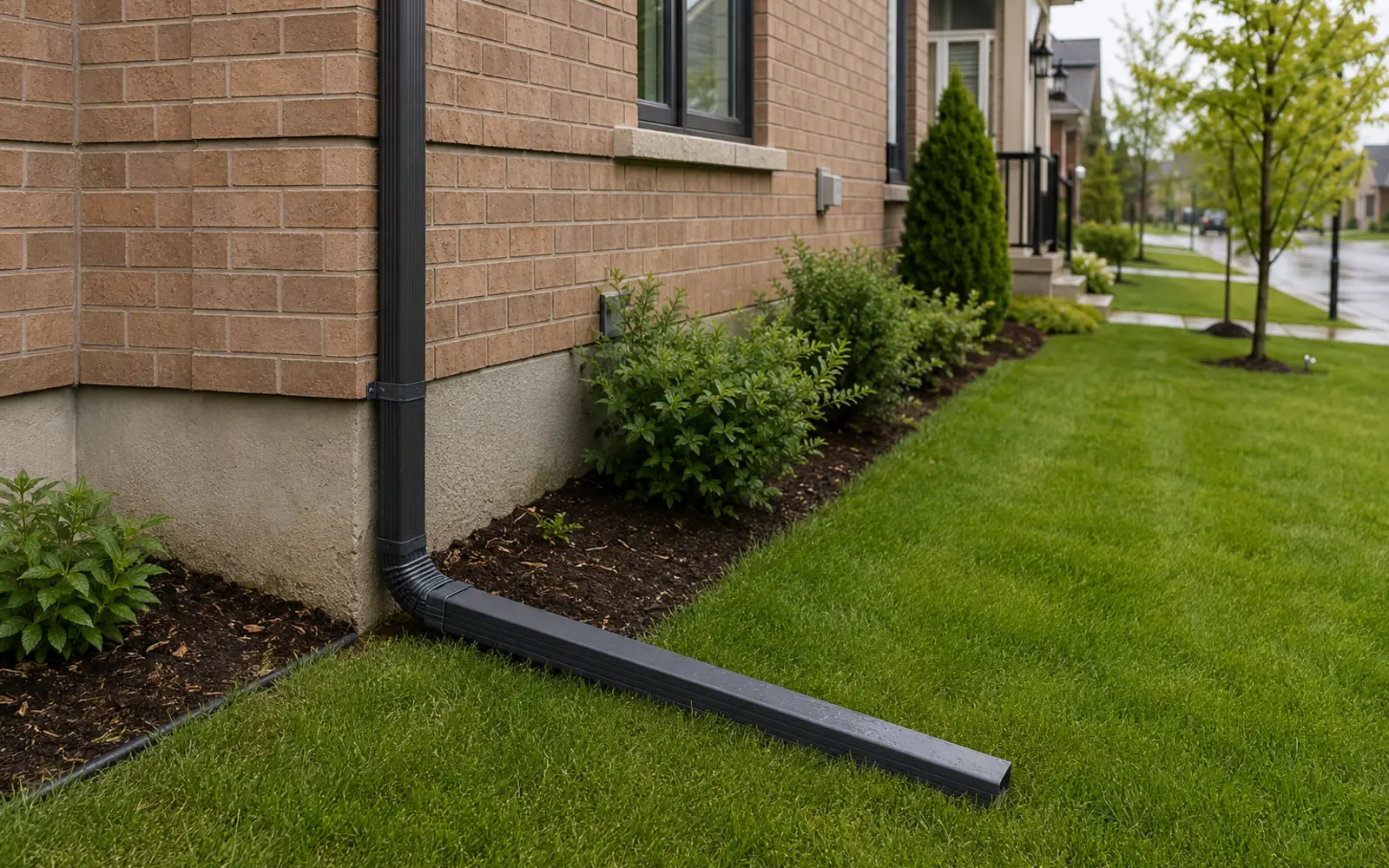
Components along the visible water path
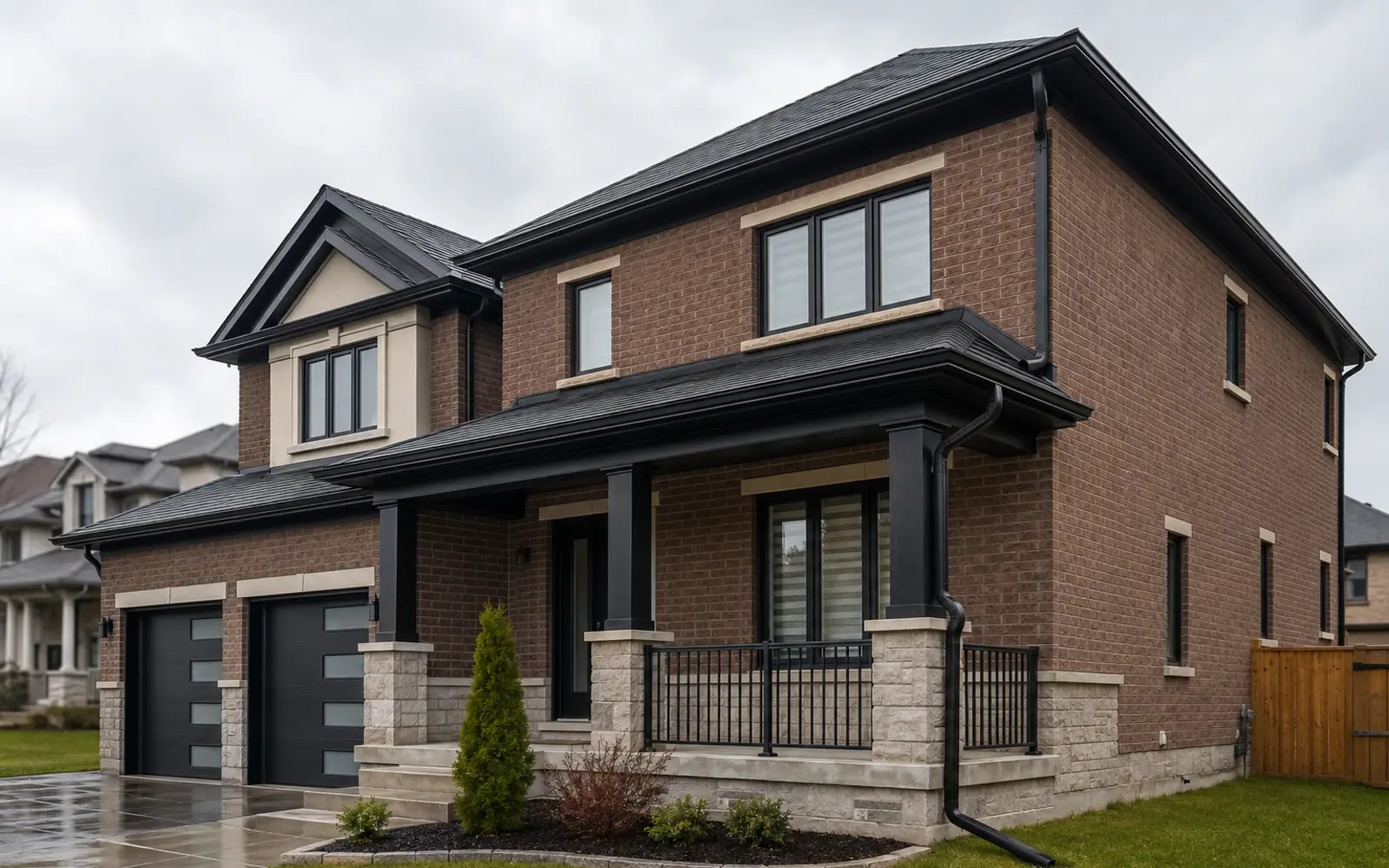
A downspout assembly can involve several connected pieces and routing decisions.
Outlet Review
Inspect how water leaves the gutter and whether the opening is positioned and sized appropriately.
Elbows & Offsets
Use correctly fitted changes in direction around overhangs and architectural features.
Vertical Sections
Replace or secure exposed downspout runs and wall straps.
Rerouting
Move the route where practical to avoid doors, walkways and other conflicts.
Extensions
Carry discharge farther from the wall without creating a new obstacle.
Discharge Review
Consider grading, boundaries, landscaping and the path water follows after leaving the extension.
Discharge distance is only one part of the decision
Brampton advises extending roof downspouts at least two metres from the foundation and away from neighbouring property. The actual route must also avoid unsafe walkways, blocked swales and locations where water simply returns toward the building.
- Foundation and finished-grade relationship
- Neighbouring property and shared side yards
- Driveways, steps, patios and gates
- Existing swales and landscaped areas
- Snow storage and winter icing locations
- Whether underground connections are present
Common downspout corrections
| Observed issue | Possible correction | What must also be checked |
|---|---|---|
| Crushed section | Replace the damaged component | Cause of impact and need for protection |
| Discharge beside wall | Add or revise an extension | Grade and final discharge direction |
| Repeated outlet blockage | Clear or revise the outlet | Debris source and gutter guard options |
| Route crosses walkway | Reroute where practical | Available wall and discharge locations |
Planning a better downspout route
- Trace current path
- Identify conflict
- Choose new route
- Install components
- Review discharge
The service remains focused on visible exterior drainage
Underground storm connections, internal plumbing, grading reconstruction and foundation drainage are separate from ordinary exterior downspout work and may require another qualified trade.
Useful details for an estimate
- Location of the affected downspout
- Where it currently empties
- Nearby doors, paths or property lines
- Building height
- Whether the gutter also overflows
Downspout and drainage questions
How far should a downspout extend from a Brampton home?
The City of Brampton recommends that roof downspouts extend at least two metres from the foundation and away from neighbouring property. Site conditions still determine the practical route.
Can an existing downspout be moved?
Often, if another outlet and wall route can carry water effectively without creating conflicts around windows, doors, walkways or property boundaries.
Can a downspout empty onto a driveway?
The discharge location should be assessed carefully because water can travel toward neighbouring property, refreeze in winter or create a pedestrian and vehicle concern.
Why does my downspout keep disconnecting?
Loose connections, movement, impact, ice, poor support or an extension that is frequently disturbed may contribute.
Do you install underground drainage?
Our standard scope focuses on visible exterior gutter and downspout components. Underground connections require a separate, property-specific scope.
Need a downspout moved or replaced?
Explain where the current downspout runs and what happens at the discharge point.