Townhouse and low-rise multi-residential properties often repeat the same gutter, outlet and downspout details across many units. Work can be organized by block, building, elevation or phase.
How is multi-residential gutter work planned?
The property is reviewed as a connected system while individual problem locations remain clearly identified. Maintenance, repair and replacement can then be grouped according to condition, access and budget.
Common multi-unit property concerns
A recurring detail can produce similar failures across several units.
- Overflow above repeated entrances
- Downspouts damaged along shared drives
- Several units reporting the same leak
- Long connected runs that sag
- Seasonal debris across a complex
- Inconsistent replacement materials from past repairs
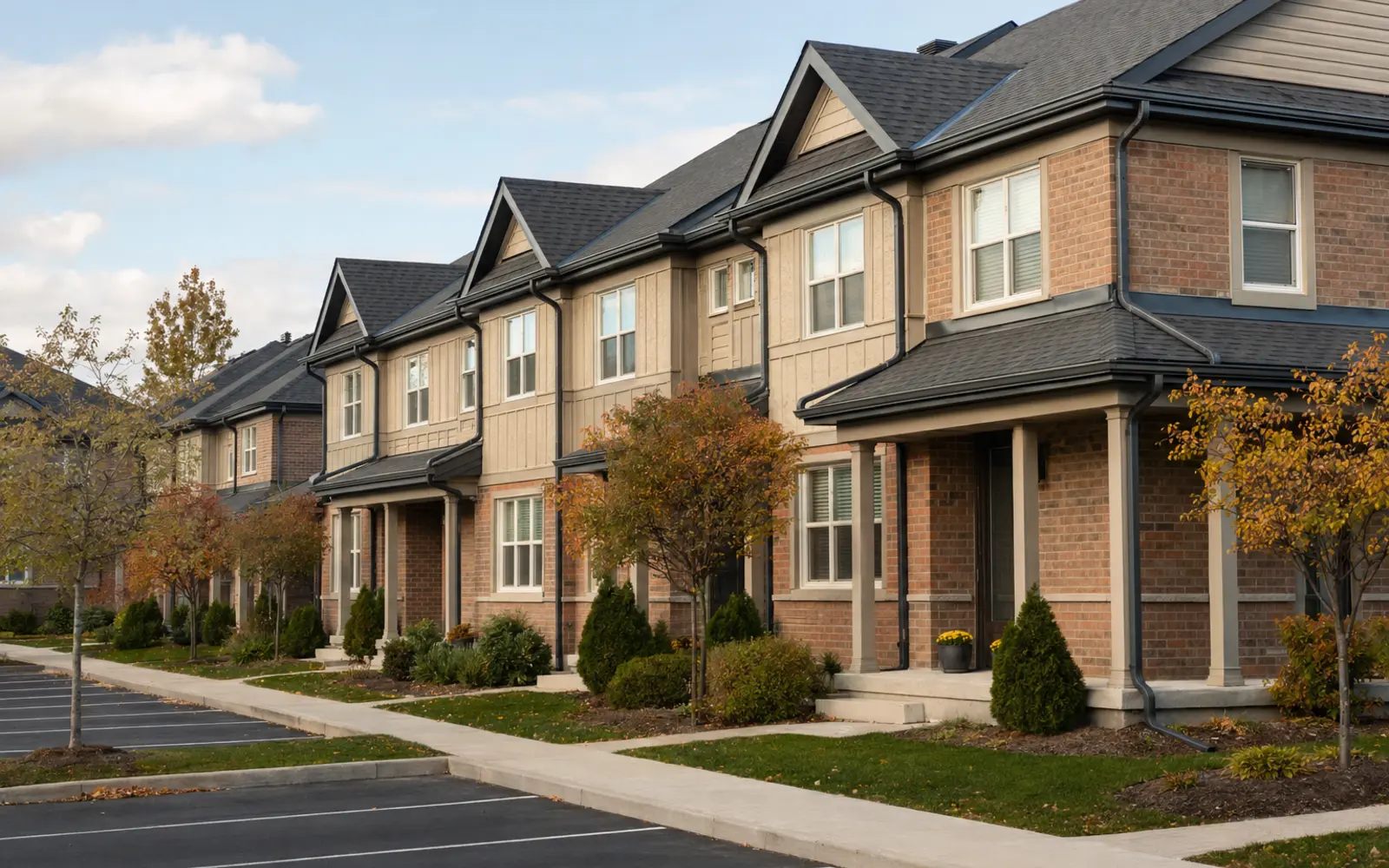
Consistent service across repeated buildings
A property-wide view helps avoid disconnected repairs and inconsistent finishes.
Block Mapping
Identify buildings, blocks, unit ranges and relevant elevations.
Pattern Review
Determine whether reported problems repeat at the same construction detail.
Repair Program
Group localized work by location and priority.
Replacement Phases
Plan larger work by building or elevation where appropriate.
Maintenance
Consider coordinated cleaning and outlet checks across the property.
Resident Coordination
Plan controlled work areas and property communication through management.
Responsibility should be confirmed before work is authorized
A condominium corporation, landlord, unit owner or another party may be responsible for exterior components depending on the property. Confirm authorization and responsibility with the applicable management documents before approving work.
- Property-management authorization
- Condominium or ownership responsibility
- Number of affected units
- Shared versus individual rooflines
- Parking and resident access
- Desired material and colour consistency
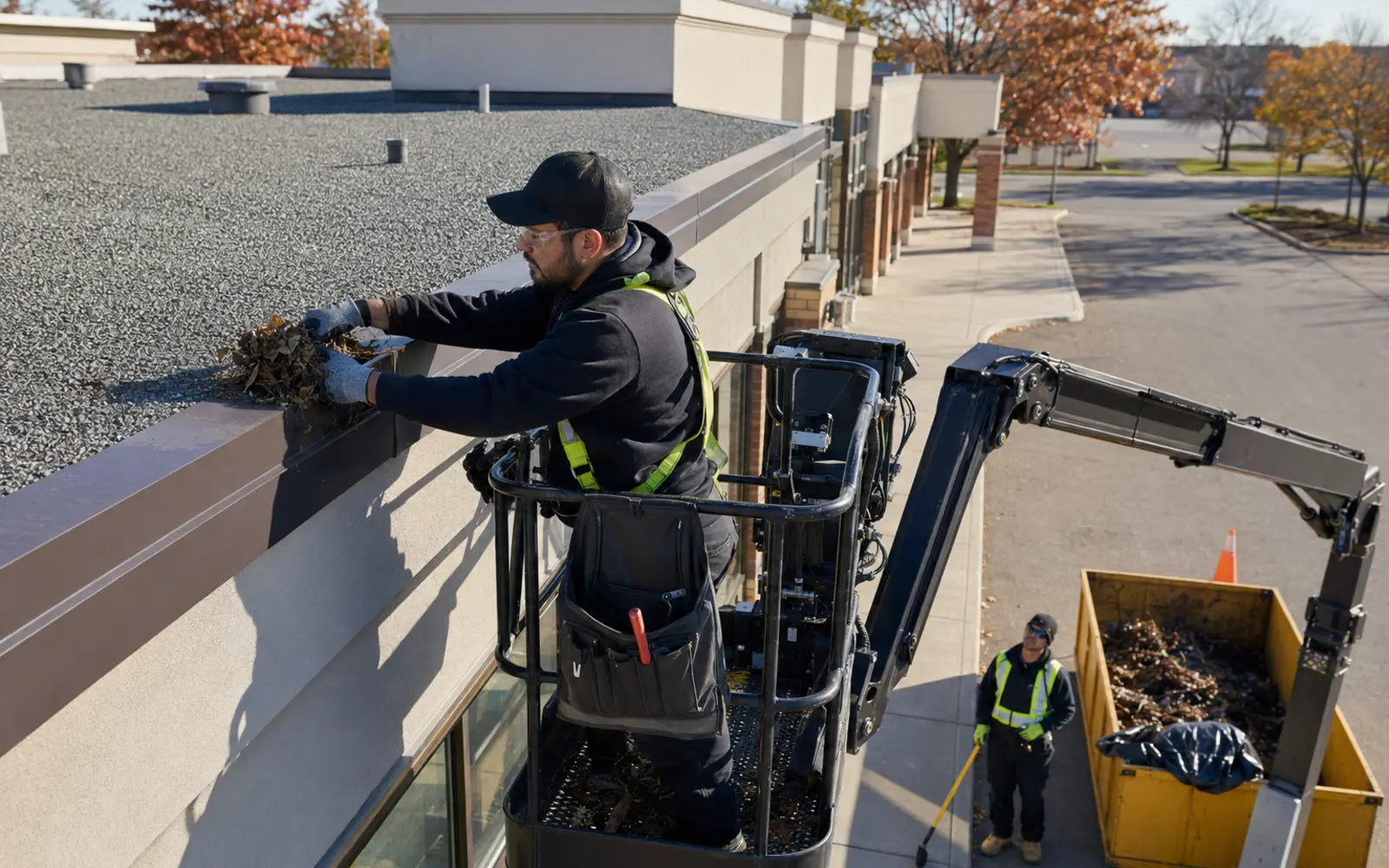
Organizing multi-unit work
| Pattern | Possible approach | Benefit |
|---|---|---|
| One isolated unit | Localized assessment | Avoid unnecessary broad scope |
| Repeated detail failure | Grouped repair program | Consistent correction |
| Aging system throughout | Phased replacement | Budget and scheduling control |
| Recurring debris | Property-wide maintenance | Coordinated access and records |
From unit report to property plan
- Map locations
- Review pattern
- Define phases
- Coordinate work
- Record completion
No legal assumptions about common elements
The authorized property representative should confirm responsibility and approvals before work proceeds. The service page should stay focused on the physical gutter system.
Useful details for an estimate
- Property name and manager
- Building, block and unit references
- Number of affected locations
- Known recurring patterns
- Access and resident-notice requirements
Multi-residential gutter questions
Can townhouse blocks be quoted separately?
Yes. The estimate can be organized by block, building or phase when the layout supports it.
Who is responsible for condominium gutters?
Responsibility depends on the property’s governing documents and arrangements. The condominium corporation or property manager should confirm authorization.
Can repairs be completed across several units?
Yes. Similar repair locations can be grouped while each unit or elevation remains documented.
Can gutter cleaning be coordinated property-wide?
Yes, subject to access, building height and an agreed scope.
Can replacement be phased over several years?
Potentially. Material consistency, system condition and priority areas should be considered when defining phases.
Planning work across a multi-unit property?
Provide the building or block references, reported problems and whether the request involves repair, replacement or maintenance.