Commercial downspouts and exposed rainwater leaders must move runoff while avoiding entrances, loading areas, vehicle routes and other operational conflicts. Larger properties require site-specific planning.
What commercial downspout work is included?
The focused scope includes exposed downspout installation, replacement, repair, wall straps, elbows, offsets and practical rerouting. Scuppers or collector heads may be included where offered; internal drains and underground connections are separate systems.
Common commercial downspout concerns
Exterior components are exposed to weather, movement and daily property operations.
- Vehicle or equipment impact
- Discharge near a public entrance
- Missing or loose wall straps
- Separated elbows and offsets
- Water staining below a roof outlet
- Winter icing near a walkway
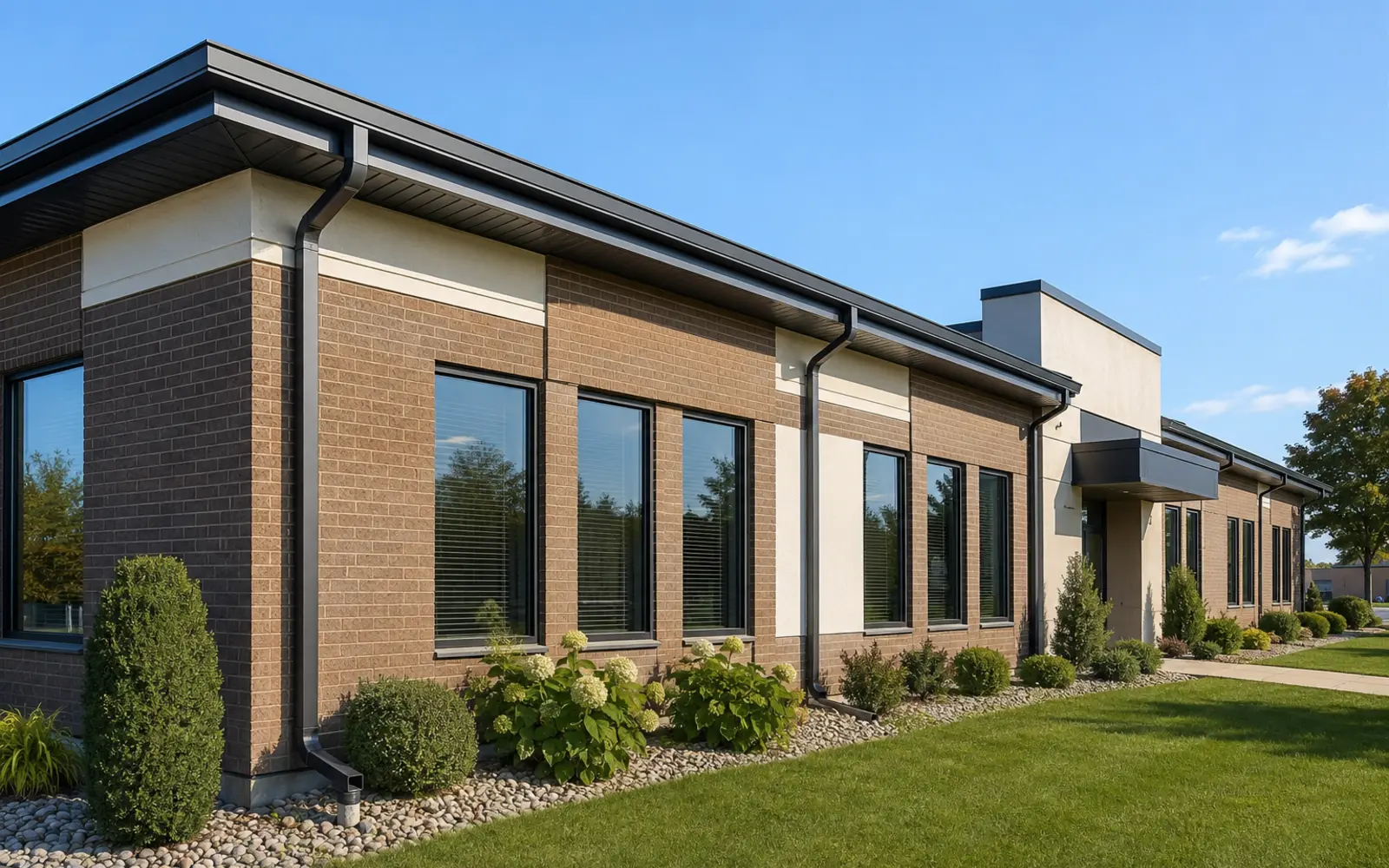
Plan the exposed route around the property
The route should move water without creating avoidable operational hazards.
Roof Outlet
Review how water enters the external downspout, collector or leader.
Visible Route
Trace vertical sections, offsets, fasteners and locations exposed to impact.
Replacement
Replace damaged components with compatible sizes and profiles where available.
Rerouting
Move the exposed path where practical to reduce conflicts.
Impact Planning
Identify repeated vehicle or equipment risk and possible protection needs.
Discharge Review
Consider paved areas, pedestrians, grading and existing site drainage.
Commercial discharge conditions vary widely
Residential extension guidance should not be copied onto every commercial site. Paved areas, catch basins, site-grading plans, internal drainage and municipal requirements can affect the correct solution.
- Existing site drainage design
- Public and tenant walkways
- Loading and service areas
- Vehicle turning paths
- Neighbouring properties
- Need for roofer, plumber or drainage specialist
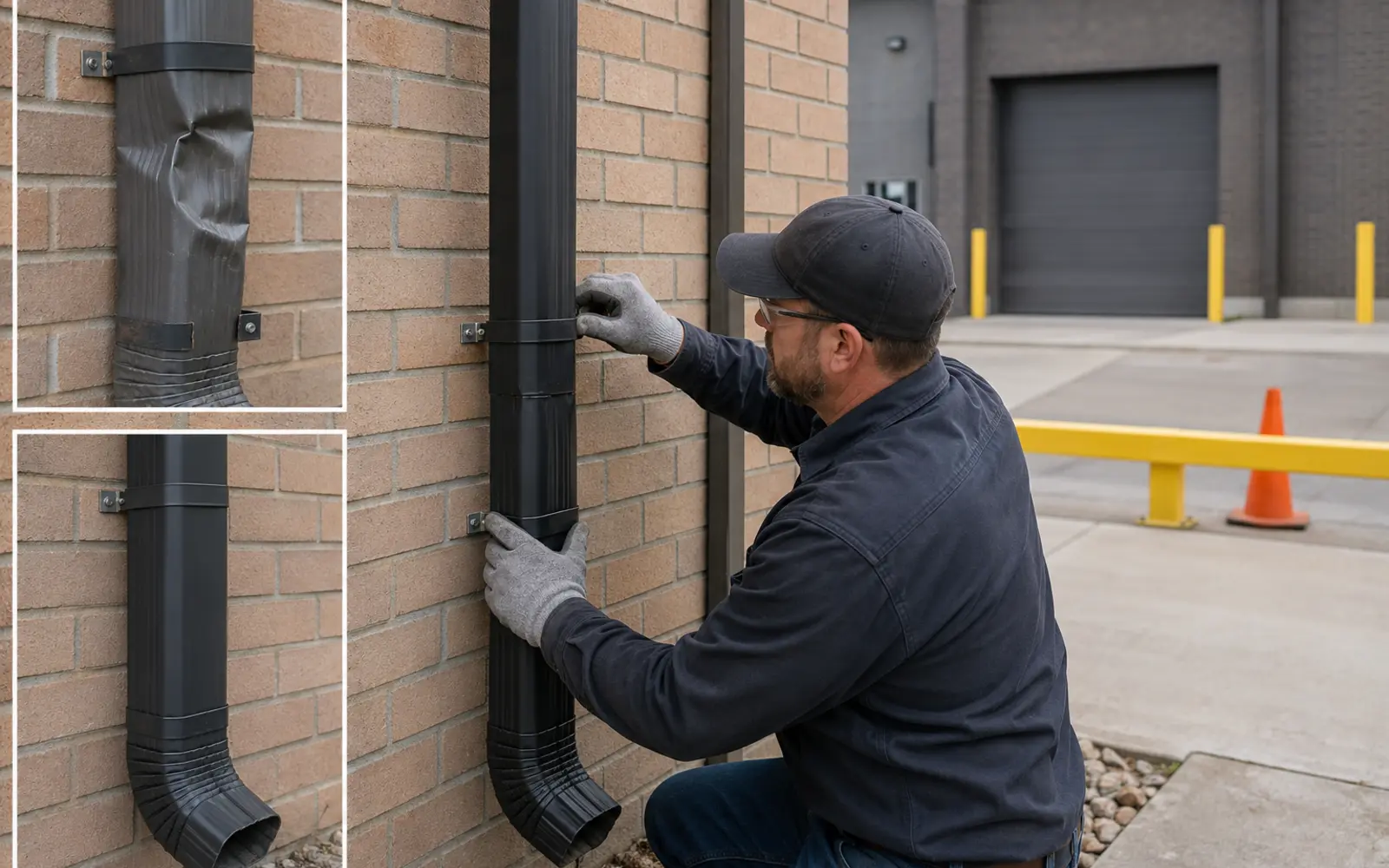
External component or another system?
| Component | Site scope | Possible other trade |
|---|---|---|
| Exposed downspout | Install, replace or reroute | Usually exterior scope |
| Scupper or collector | Property-specific scope | May involve roofing detail |
| Internal roof drain | Not standard gutter work | Roofer or plumber |
| Underground connection | Not standard visible scope | Drainage or plumbing specialist |
Review the complete external path
- Identify outlet
- Trace route
- Review conflicts
- Complete approved work
- Confirm discharge
Do not blur exterior and internal drainage
Visible exterior gutters and downspouts are distinct from roof membranes, concealed plumbing, engineering work and underground site drainage. Those systems may require separate qualified trades.
Useful details for an estimate
- Building and affected elevation
- Downspout size if known
- Impact or separation damage
- Entrance, loading or walkway conflicts
- Where water currently discharges
Commercial downspout questions
Can a commercial downspout be rerouted?
Sometimes, if a new outlet and wall route can carry water appropriately without conflicting with building operations.
Can damaged downspouts near loading docks be replaced?
Yes. The repeated impact risk and possible need for protective measures should also be reviewed.
Do you service scuppers and collector heads?
These components require a property-specific review because custom metal and roof-interface work may be involved.
Do you clear internal roof drains?
Internal drains are not ordinary exterior gutter work and may require a roofer or plumber.
Can downspout discharge create winter ice?
Yes. Water crossing paved or pedestrian areas can refreeze, so the discharge path is an important planning consideration.
Need a commercial downspout corrected?
Identify the building, affected route, current discharge area and any impact or pedestrian concerns.