A gutter can overflow because it is blocked, poorly aligned, receiving concentrated water, connected to a restricted downspout or unable to move runoff through the available outlets. Cleaning is only one possible answer.
Why do clean gutters sometimes overflow?
Clean gutters may still overflow when slope, capacity, outlet location, downspout restriction, roof valleys or guard compatibility affect flow. The location and timing of the overflow help narrow the likely cause.
Details that help identify the cause
Observe what happens during rain without climbing or placing yourself at risk.
- Overflow always occurs near one valley
- Water stands in the gutter after rain
- Only one outlet backs up
- Water passes over a guard
- Overflow occurs along a long straight run
- The downspout discharges slowly or disconnects
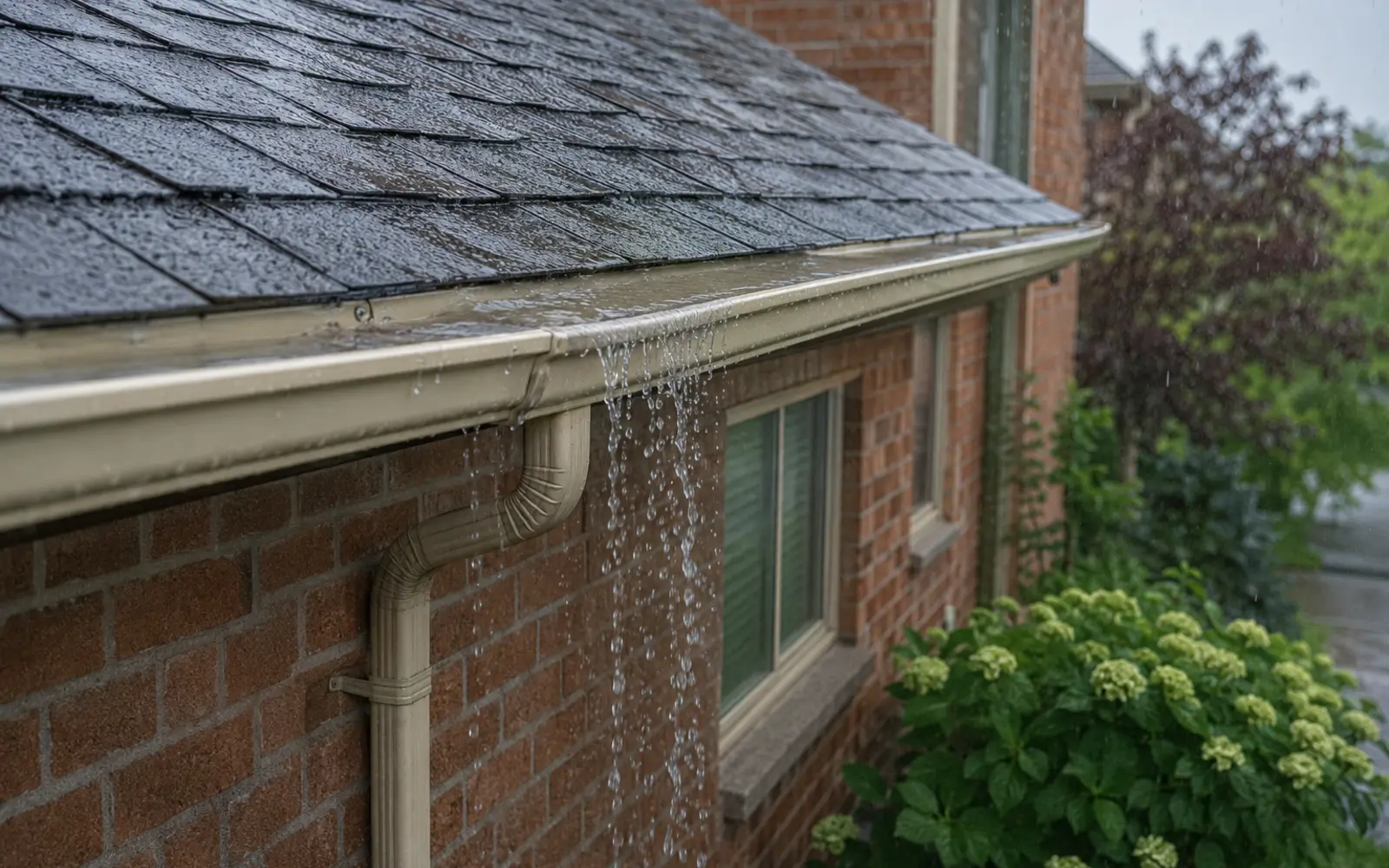
Trace the problem through the full system
The point where water becomes visible may not be the point where the restriction begins.
Roof Flow
Identify valleys and roof areas concentrating runoff into one short section.
Gutter Interior
Check debris, standing water, slope and visible deformation.
Outlets
Inspect openings where water transitions into downspouts.
Downspouts
Review elbows, restrictions, separation and physical damage.
Guards
Check whether debris or the installation angle affects water entry.
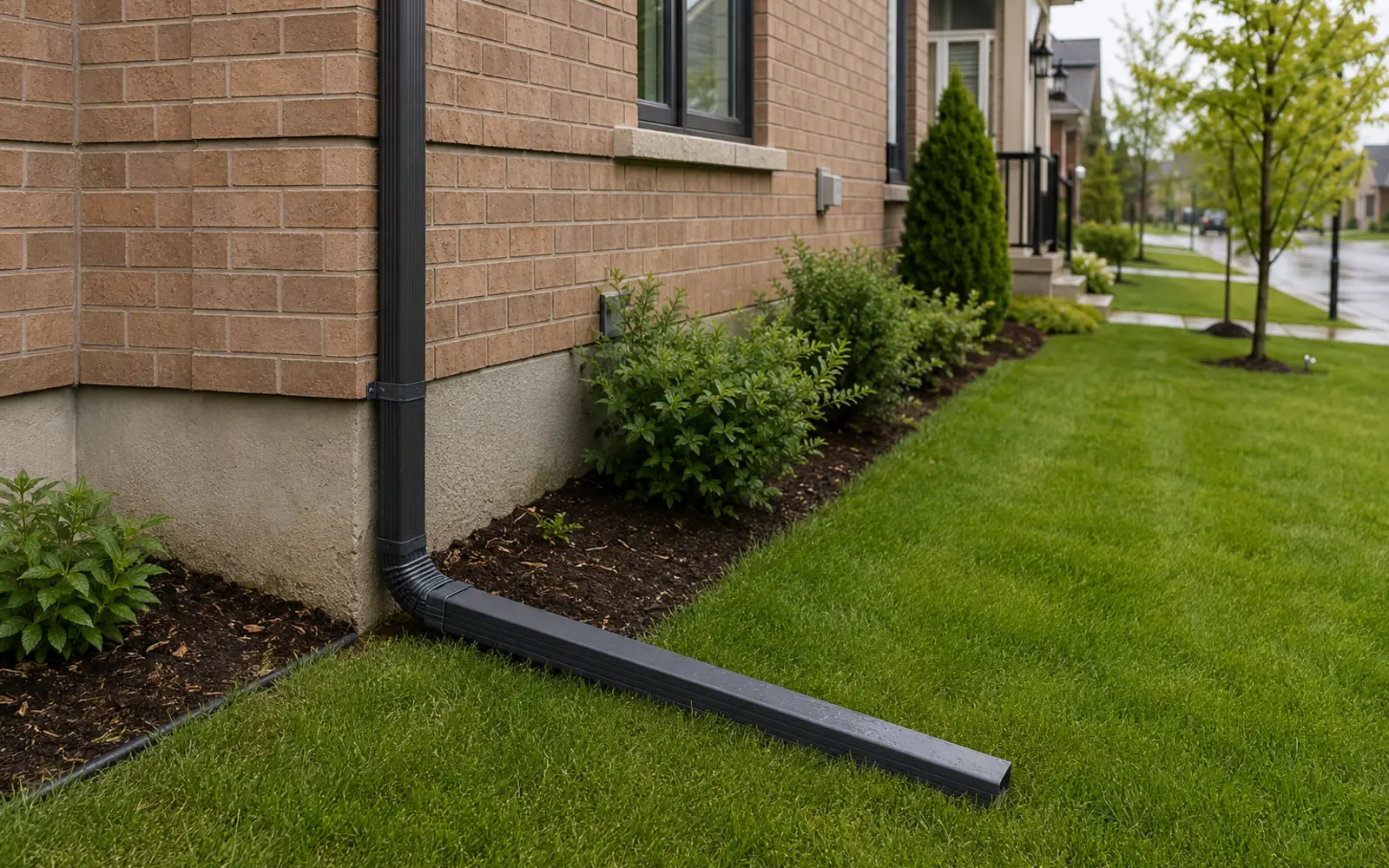
Discharge
Confirm that water leaving the downspout can continue away from the building.
The pattern matters more than one photograph
Light-rain dripping, heavy-rain overflow and snowmelt backup can point to different combinations of issues. Note the affected elevation, nearby valley and whether the problem continues after the rain stops.
- Rain intensity when overflow begins
- Exact location along the roofline
- Water remaining after the event
- Downspout flow and discharge
- Recent guard or roofing work
- Seasonal debris and winter ice
Symptom and possible direction
| Symptom | Possible causes | Potential next step |
|---|---|---|
| Overflow near outlet | Blocked outlet or downspout | Inspect and clear path |
| Standing water in run | Poor slope or sagging | Review alignment and attachment |
| Overflow below valley | Concentrated flow or capacity | Assess layout and outlet options |
| Water over guard | Surface debris or incompatibility | Inspect guard and roof transition |
From symptom to correction
- Record location
- Trace water path
- Identify likely cause
- Approve correction
- Observe result
No single cause should be assumed
Overflow does not automatically mean the gutter is too small, and water near a wall does not automatically mean the gutter is the only source. The visible system should be assessed before recommending replacement.
Useful details for an estimate
- Affected side of the property
- Light or heavy rain conditions
- Known cleaning history
- Presence of guards
- Photos taken safely from the ground
Overflow troubleshooting questions
Why does only one part of the gutter overflow?
That location may receive concentrated roof flow, sit lower than the surrounding run or connect to a restricted outlet.
Will cleaning always stop overflow?
No. Cleaning helps when debris is the cause, but slope, capacity, guards, outlets and downspouts can also matter.
Can another downspout be added?
Sometimes, if the new outlet and discharge path fit the roofline and property. It should not be added without planning where the water will go.
Why is water left in the gutter after rain?
Standing water may indicate a low spot, sagging, poor alignment or a restricted outlet.
Can overflow damage the fascia?
Repeated wetting can stain or contribute to deterioration. The fascia and roof-edge conditions should be reviewed along with the gutter.
Not sure why the gutter overflows?
Tell us where it happens, what the rainfall was like and what the downspout was doing at the time.