Soffit and fascia finish the roof edge and interact directly with ventilation, weather protection and gutter attachment. Their condition should be reviewed when an eavestrough is pulling away or a complete exterior update is planned.
What is the difference between soffit and fascia?
Fascia is the vertical roof-edge surface where gutters are commonly attached. Soffit covers the underside of the overhang. Depending on the location and roof design, soffit panels may be vented or solid.
Signs the roofline components need attention
Visible movement, staining or deterioration can affect more than appearance.
- Loose or rattling soffit panels
- Warped, stained or damaged fascia
- Gutters pulling away from the roof edge
- Open gaps that may allow pest entry
- Older finishes being coordinated with new gutters
- Damaged components around a porch or garage
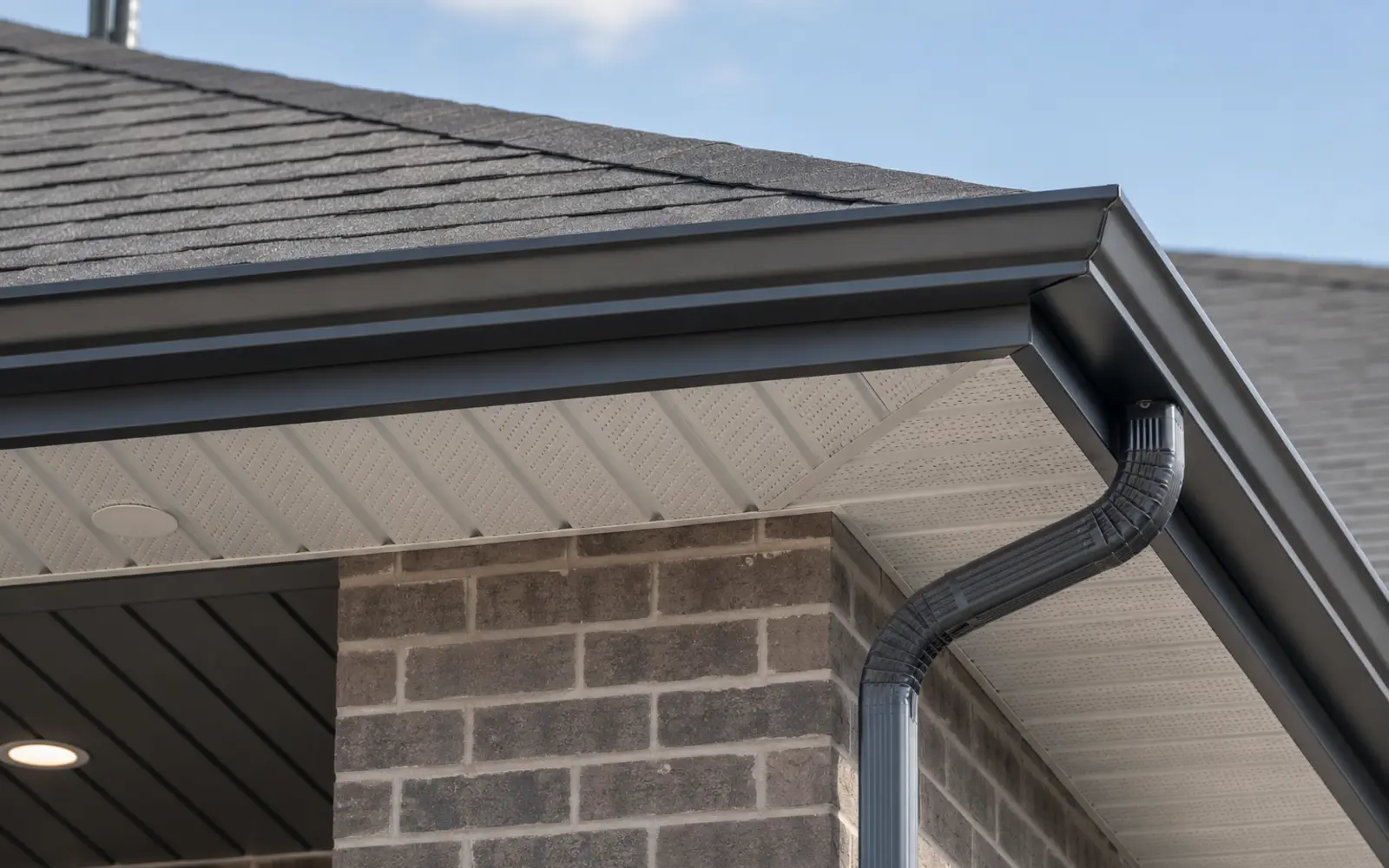
Coordinated roof-edge work
The scope should separate cosmetic covering from replacement of damaged supporting material.
Existing Condition
Inspect visible panels, fascia surfaces, attachment and staining.
Material Removal
Remove components included in the agreed replacement scope.
Soffit Selection
Use vented or solid panels according to the location and existing ventilation design.
Fascia Finish
Install or replace the vertical roof-edge finish and prepare for compatible gutter attachment.
Colour Coordination
Coordinate soffit, fascia, gutters, downspouts and surrounding exterior materials.
Edge Details
Finish corners, transitions and connections around porches, garages and roof changes.
Ventilation should not be guessed from appearance
More vented soffit is not automatically better. The roof and attic ventilation design determines where intake ventilation is useful. Visible panels should not be changed in a way that interferes with the existing system.
- Existing vent locations and panel type
- Condition of wood or backing material
- Gutter attachment points
- Roof-edge and drip-edge condition
- Pest or moisture evidence
- Need for another qualified trade
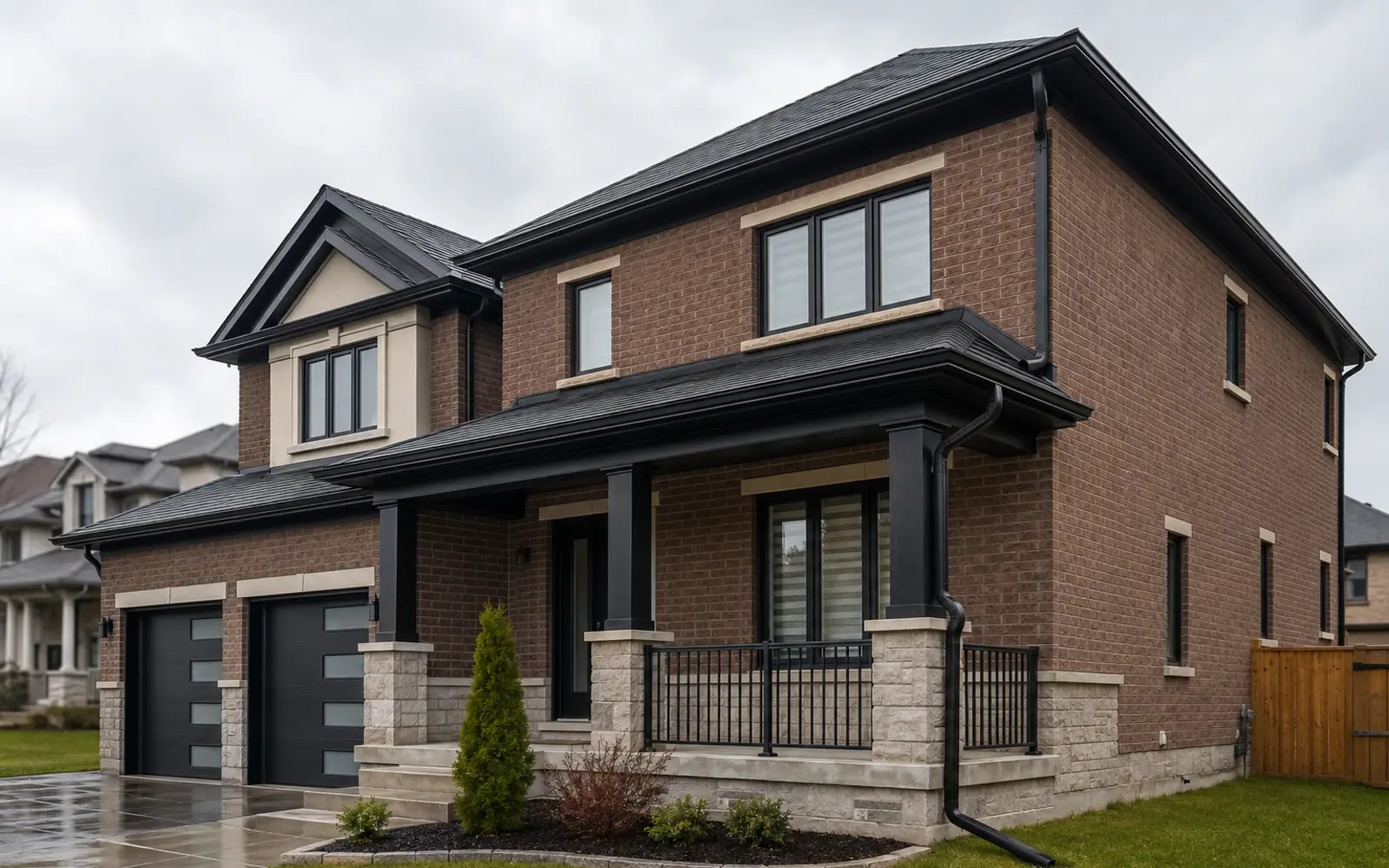
Cover, repair or replace?
| Condition | Possible approach | Important limitation |
|---|---|---|
| Sound underlying material | New aluminum finish may be possible | Moisture must not be concealed |
| Localized loose panel | Re-secure or replace affected piece | Match and condition must be checked |
| Rotten fascia board | Replace damaged support first | Capping alone is not a repair |
| Ventilation concern | Review vented panel layout | May require roofing or attic expertise |
Coordinating the roofline
- Review components
- Confirm scope
- Choose finishes
- Install roofline materials
- Coordinate gutters
Aluminum finish is not structural repair
Rotten boards, damaged roof decking, active leaks or ventilation problems may need to be corrected before new soffit, fascia or gutters are installed.
Useful details for an estimate
- Which elevations are affected
- Visible staining, movement or rot
- Gutter replacement plans
- Preferred colour
- Porches, garages or difficult-access areas
Soffit and fascia questions
Does fascia support the gutter?
Gutters are commonly attached at the fascia area, so sound supporting material and appropriate fastening are important.
Is all soffit supposed to be vented?
No. The appropriate panel depends on the location and the building’s ventilation design.
Can new aluminum cover rotten wood?
Damaged or rotten supporting material should not simply be concealed. It must be assessed and addressed before finishing.
Can soffit and fascia be replaced with the gutters?
Yes. Coordinating the work can produce a consistent roofline and ensure the gutter is attached to suitable material.
Can colours be coordinated?
Yes. Gutters, downspouts, fascia and soffit can be planned together, subject to available supplier finishes.
Updating soffit, fascia or the full roofline?
Tell us which components are affected and whether gutter replacement is part of the project.