Seamless gutters are formed in long continuous runs for the measured roofline. They reduce the number of joints along straight sections, while corners, end caps and outlets still require carefully assembled connections.
What does seamless mean?
“Seamless” means the long straight gutter runs are formed without intermediate sectional joints. It does not mean the entire system has no joints: corners, outlets and end caps remain necessary and must be installed correctly.
Why homeowners consider seamless aluminum
The system combines a clean appearance with low-maintenance exterior aluminum.
- Replacing older sectional gutters
- Reducing unnecessary joints on long runs
- Coordinating with new soffit and fascia
- Updating the exterior colour
- Adding gutters to a garage or addition
- Planning a complete roof-water system
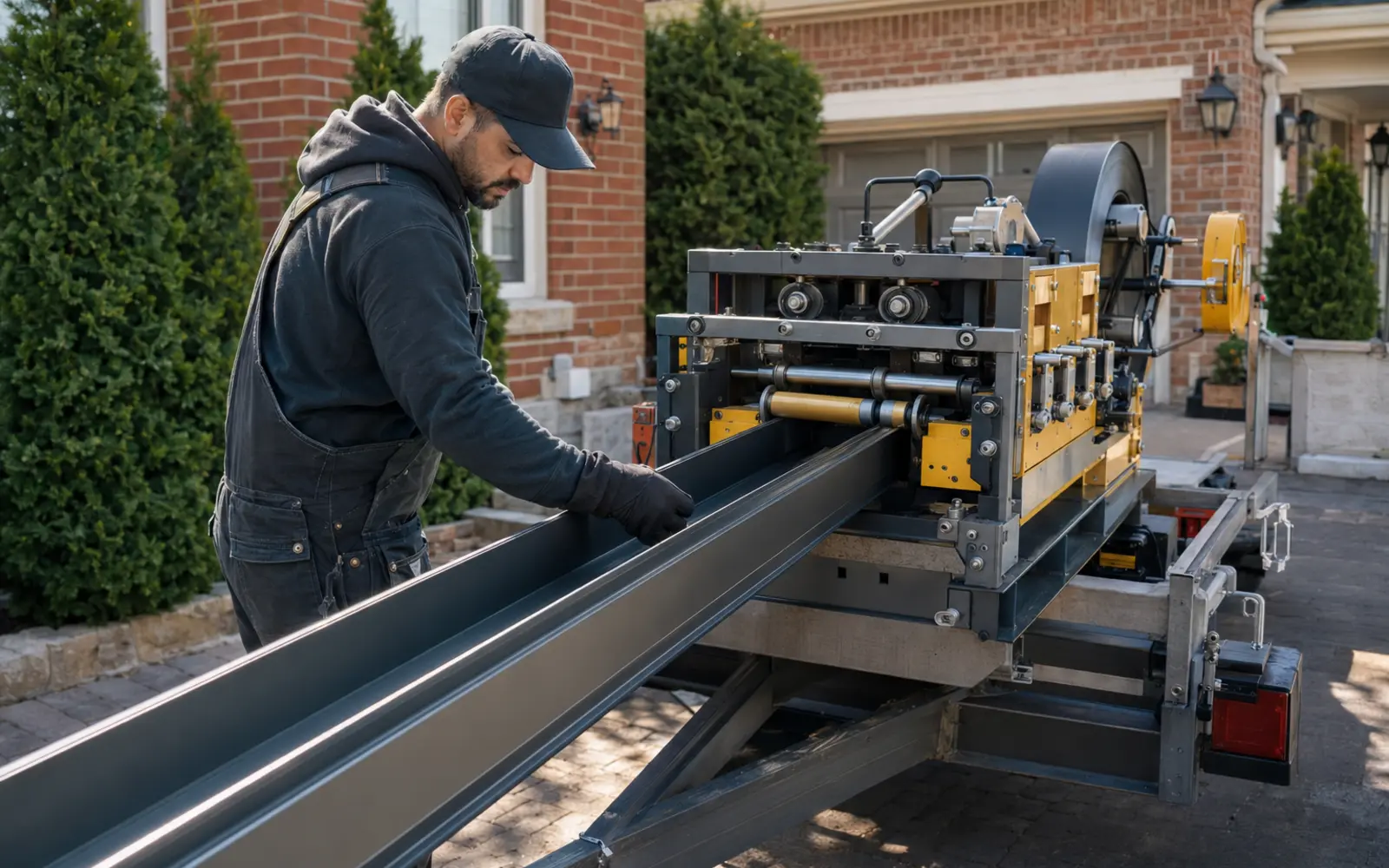
More than a continuous piece of aluminum
Forming the gutter is one step within the larger drainage layout.
Measured Runs
Continuous lengths are formed to suit the roofline rather than assembled from short store-bought sections.
Profile Selection
Choose a profile and capacity appropriate to the roof and available components.
Colour Planning
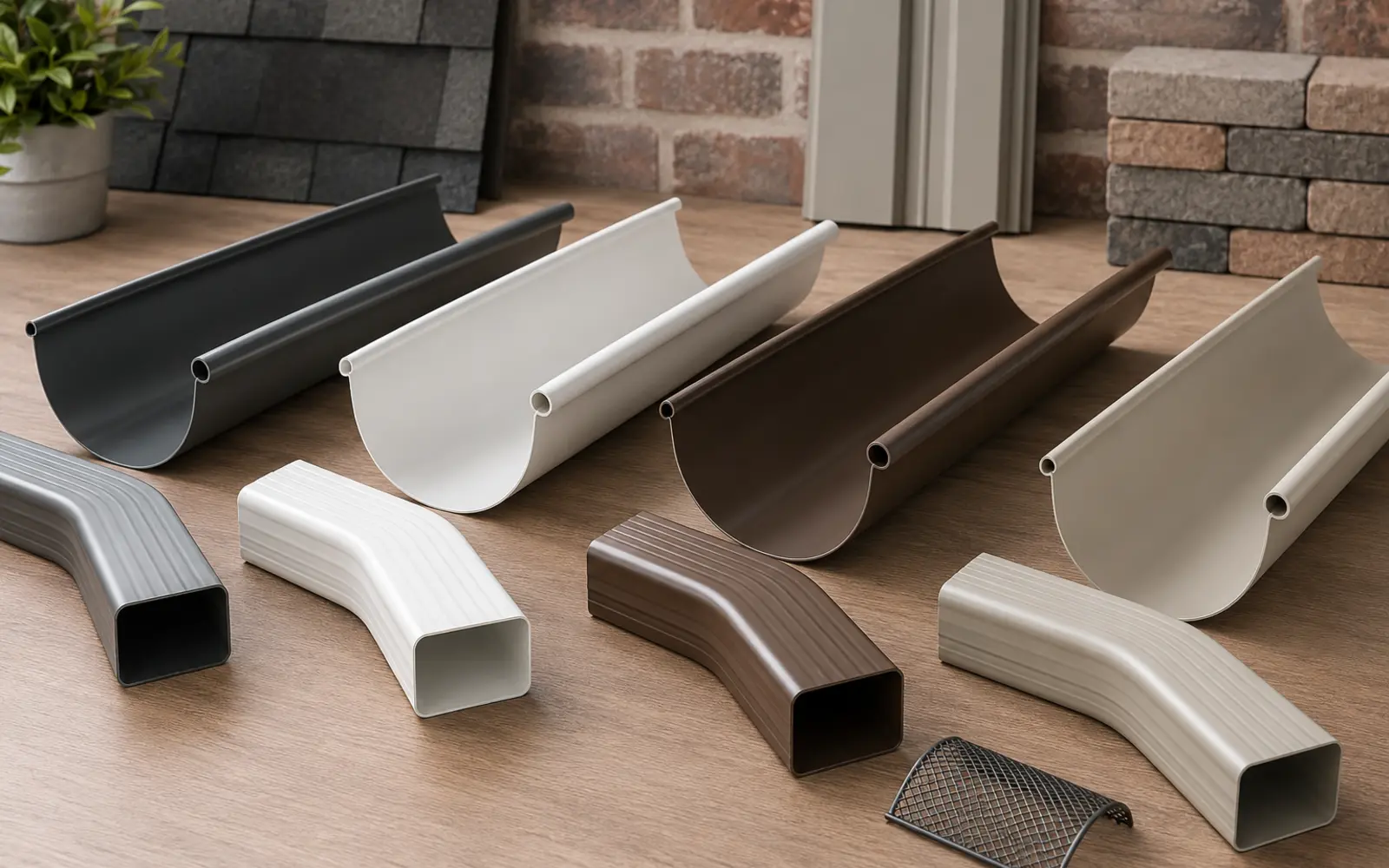
Coordinate the gutter with roof, fascia, soffit, brick, siding and downspouts.
Corners & End Caps
Assemble unavoidable joints with attention to fit, movement and water flow.
Outlets
Place outlets where the collected water can enter a suitable downspout path.
Complete System
Connect the formed gutter to downspouts and above-ground discharge components.
Fewer seams do not replace good drainage planning
A long continuous gutter can still overflow if it is undersized, poorly sloped, obstructed or connected to too few outlets. Seamless construction should be paired with a layout that fits the actual roof.
- Length and shape of each roofline run
- Roof valleys and concentrated flow
- Available outlet positions
- Downspout routing and discharge
- Fascia condition and attachment
- Gutter guard compatibility
Seamless and sectional systems
| Feature | Seamless aluminum | Sectional gutter |
|---|---|---|
| Straight runs | Formed as long continuous lengths | Joined from shorter pieces |
| Joints | Primarily at corners and outlets | Additional joints along straight runs |
| Fit | Formed for the measured roofline | Limited by available section lengths |
| Installation | Requires specialized forming equipment | Can be assembled from stocked sections |
Planning a seamless system
- Measure roofline
- Select profile
- Plan outlets
- Form and install
- Connect downspouts
Seamless does not mean maintenance-free
Outlets can still clog, corners can still require attention and debris can still reduce flow. The system should be inspected and maintained according to the property conditions.
Useful details for an estimate
- Approximate property type and height
- New installation or replacement
- Preferred colour family
- Known overflow locations
- Interest in guards, soffit or fascia
Seamless gutter questions
Do seamless gutters have any joints?
Yes. Long straight runs have no intermediate section joints, but corners, end caps and outlets still require connections.
Are seamless gutters made at the property?
They are commonly formed using portable roll-forming equipment based on the measured runs required for the project.
Is aluminum available in different colours?
Yes. Availability depends on the supplier, and colours should be confirmed against physical samples before ordering.
Can guards be installed with seamless gutters?
Often yes, but the guard should be compatible with the gutter profile, roof edge and expected debris.
Do seamless gutters solve every overflow problem?
No. Capacity, slope, outlets, downspouts and debris still affect performance.
Considering seamless aluminum gutters?
Tell us whether the project involves a complete replacement, a new roofline or coordinated soffit and fascia work.